More and more workplaces and training programs are asking for CPR certification, so it’s no surprise people want to know how quickly they can get it done. The good news? It doesn’t take nearly as long as many expect, and the need for CPR‑ready people is real. In the U.S., around 10,000 people go into cardiac arrest at work every year. Even then, more than half of employees never get CPR or AED training from their workplace.
So most people wouldn’t know what to do if someone suddenly collapsed. With stats like that, taking a CPR Certification Course in Austin at our CPR Training Clinic isn’t just a good idea. It could genuinely help you save someone’s life.
How Long Does a CPR Certification Course in Austin Take?
Most CPR classes take anywhere from 2 to 5 hours, depending on the type of certification you choose.
Some courses are super quick, while others take a little longer because they cover more material. This means that it’s not an all-day commitment, and you just need a few hours, and you’re good to go!
Here’s the general idea:
- Basic CPR: around 2–3 hours
- CPR + AED: around 3–4 hours
- CPR for Healthcare Providers (BLS): around 4–5 hours
- CPR + First Aid combo: around 5–6 hours
Why Do Some CPR Classes Take Longer Than Others?
The difference comes down to what you’re learning and how detailed the course is. For example:
- Basic CPR focuses on chest compressions, rescue breaths, and helping someone until medical help arrives. It’s pretty straightforward, so you can move through it fairly quickly without feeling rushed.
- Our CPR with AED training takes a bit longer because you also learn how to use an automated external defibrillator (the device that gives electric shocks during cardiac arrest). These machines are actually easy to use, but the class still sets aside time for everyone to practise and become comfortable.
- Healthcare-level CPR (BLS) goes deeper since nurses, medical students, and EMTs need more advanced skills. In our BLS course, you’ll cover things like two-rescuer CPR, bag-mask ventilation, and working efficiently as part of a medical team. So, naturally, with all that extra practice and instruction, the class runs a bit longer.
What Happens During a CPR Certification Course in Austin?
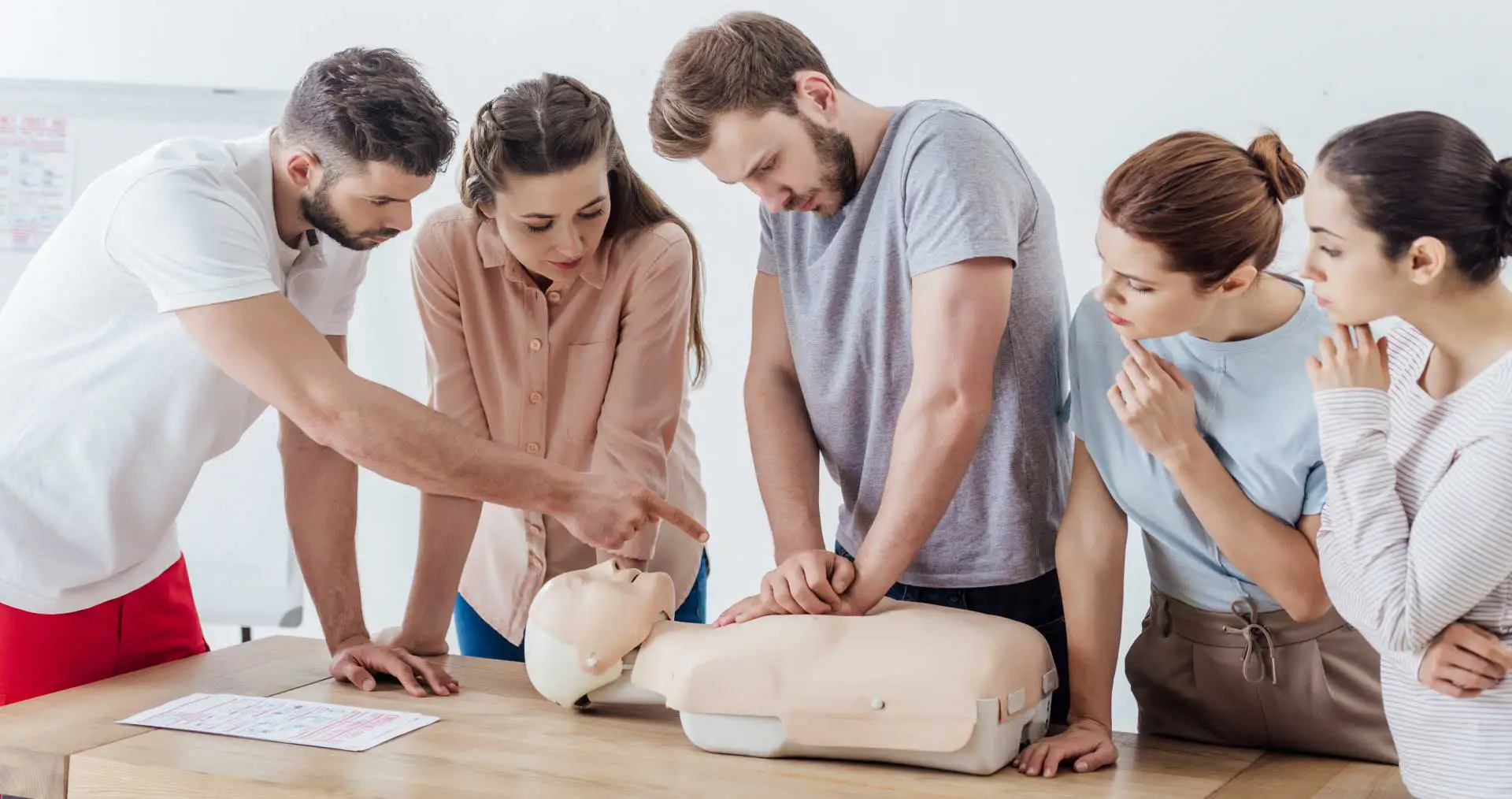
If you’ve never taken one before, here’s a quick idea of what the session is like. It’s very hands-on, so you spend more time practising than sitting and listening. What’s more? Our instructors keep the class simple and easy to understand. That’s why the hours pass faster than people expect.
You’ll:
- Watch short training videos or listen to brief explanations
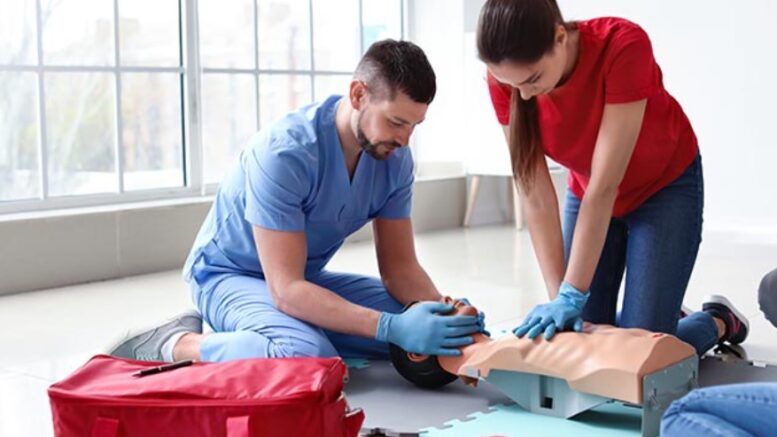
- Practise chest compressions on a CPR manikin
- Learn rescue breaths
- Try AED practice drills
- Go over what to do in real-life emergency scenarios
- Take a short skills test at the end
People Also Ask
Is getting CPR certified hard?
Not at all. At our clinic, we keep classes hands-on and easy to follow, so anyone can learn the skills and feel confident by the end.
Why is CPR called the “Kiss of Life”?
It gets that nickname because of the rescue breaths, AKA giving someone oxygen when their heart has stopped. That little breath can make a huge difference in saving a life.
What percent of CPR fails?
Survival rates do vary, but on average, only about 10–20% of out-of-hospital cardiac arrests result in survival. Timely CPR can dramatically improve those odds!
What is the golden rule of CPR?
The golden rule is simple: start chest compressions right away and keep going until professional help arrives. Don’t worry about getting everything perfect. Acting fast is what really counts.
Do Online CPR Courses Take Less Time?
Yes, they can. Online blended courses are great for saving time because you can go through all the theory at home at your own pace, and then just show up for the hands-on practice.
- Online portion: 1 to 2 hours. You watch videos, read short lessons, and get familiar with the steps.
- In-person skills test: 20 to 40 minutes. This is where you actually practise on a manikin and demonstrate what you’ve learned.
- The whole process may take around 1.5 to 3 hours, depending on how quickly you move through the online lessons and how comfortable you feel with the hands-on practice.
How Long is CPR Certification Good For?
At the CPR Training Clinic, all of our CPR certifications are valid for 2 years. Once that period is up, you’ll need to take a renewal course to keep your skills and certification current. The great part is that our renewal classes are much shorter than the initial training since you’re already familiar with the basics. Most refresher courses take just 1.5 to 2 hours, giving you a quick, efficient way to stay certified and confident in your ability to respond to emergencies. We make it easy to keep your certification up to date without taking up your whole day.
Can You Get CPR Certified in One Day?
Absolutely, most people do it! Our CPR Certification Course in Austin is not that long, and it is hands-on, so in just a few hours, you can learn the necessary skills, pass the test, and walk out with your certification. It’s one of those rare things where a small time investment gives you a skill that has the power to literally save a life.
So, what are you waiting for?
Get your spot reserved at our CPR Training Clinic in Austin today!
FAQs
Can I use my CPR certification for work right away?
Yes! Once you finish our course, you get your card the same day, and it’s ready to show your employer immediately.
How often should I renew my CPR certification?
Every 2 years. Our refresher courses are quick, so it’s easy to stay up to date.
Is hands-on practice really necessary?
Definitely, practising on a manikin is the best way to make sure you’ll react correctly in a real emergency. We focus on this in every class, so you leave ready to act.
Do I need to bring anything to the class?
No. We provide all the equipment you’ll need, including manikins and AED trainers.